# Blockchain Related Articles

HTX News Center provides the latest articles and in-depth analysis on "Blockchain", covering market trends, project updates, tech developments, and regulatory policies in the crypto industry.

The Value Distribution of Stablecoins

**Summary: The Value Distribution of Stablecoins** The article argues that stablecoins are evolving from mere trading tools into broader channels for dollar access. It divides the stablecoin ecosystem into four layers to analyze how value is distributed: 1. **Issuance Layer:** Mints stablecoins, holds reserve assets, and captures the spread between reserve yield and user costs (e.g., Tether, Circle). This layer currently earns the largest profit margin. 2. **Infrastructure Layer:** Connects stablecoins to the traditional financial system, handling fiat on/off-ramps, banking integration, compliance (KYC/AML), and asset management (e.g., Bridge, BVNK). This is the "unglamorous" but critical work, building the essential bridges between crypto and real-world finance. 3. **Acquiring/Distribution Layer:** Integrates stablecoins into merchant systems, manages payment flows, and provides enterprise financial software (e.g., Stripe, Coinbase). They act as the access point for businesses. 4. **Application Layer:** The end-users and businesses that ultimately use stablecoins for payments, settlements, or as a store of value. They benefit from convenience but have little pricing power. The core thesis is that while the issuance layer currently dominates profits, the often-overlooked **infrastructure layer holds significant long-term potential**. The real challenge and barrier to mass adoption is not the on-chain transfer of stablecoins (which is simple), but the complex "last mile" integration into existing business workflows, banking systems, and regulatory frameworks across different countries. Companies in this layer are currently in a "land grab" phase, investing heavily to build networks, secure bank partnerships, and establish compliance pathways. While their position is currently pressured by the profitable issuers above and distribution platforms below, the article suggests that if stablecoins become a default financial rail for businesses, the infrastructure providers who have done the hard work of integration will ultimately gain strong pricing power and become entrenched, essential players.

marsbit11h ago
The Value Distribution of Stablecoins

marsbit11h ago

Blockchain Has Finally Started to Sail into the Mainstream After 18 Years

Blockchain Finds Its True Path After 18 Years: Becoming the Financial Backbone for AI Agents and Autonomy This analysis explores a pivotal shift in the blockchain and crypto investment landscape, driven by the dominance of AI. Major venture capital firms, including Variant, Paradigm, Haun Ventures, and YZi Labs, are moving beyond pure "crypto" investment theses. They are expanding their focus to AI, robotics, and frontier tech, signaling that blockchain is no longer seen as a standalone sector but as an underlying infrastructure layer. The core argument is that blockchain's killer application may not be user-facing apps, but rather providing the economic rails for the coming wave of AI agents, autonomous robots, and automated systems. Key capabilities like self-custody wallets, programmable stablecoins for micropayments, on-chain identity, and verifiable smart contracts are positioned as essential for a future where machines conduct economic activity. The recent $1.4 billion investment by Tether (via its venture arm) in German robotics company NEURA Robotics exemplifies this, aiming to embed Tether's wallet tools directly into robots for autonomous transactions. While many "AI + Crypto" projects remain superficial, the article concludes that true value lies where crypto is a necessary component—enabling machine-to-machine payments, agent autonomy, verifiable data provenance, and open financial settlement for the AI era. For crypto venture capital, this convergence with AI represents both an adaptation to shifting capital flows and a potential path to unlocking the large-scale, non-speculative utility the industry has long sought.

marsbit15h ago

Blockchain Has Finally Started to Sail into the Mainstream After 18 Years

marsbit15h ago

Blockchain has finally begun sailing toward the main channel after 18 years

After 18 years of development, blockchain technology is beginning to move from a specialized niche into mainstream adoption, according to a recent industry analysis. The shift is reflected in the changing strategies of major crypto venture capital firms, which are expanding their focus beyond pure "digital ownership" towards broader themes like "autonomy." The report highlights that leading VC firms like Variant, Paradigm, Haun Ventures, and YZi Labs are broadening their investment mandates to include not only crypto but also artificial intelligence (AI), robotics, biotech, and other frontier technologies. This reflects a recognition that the isolated "crypto investment" narrative is losing appeal to limited partners (LPs) as capital and attention increasingly flow toward AI and other high-growth tech sectors. A key emerging thesis is that blockchain's most significant future application may not be as a consumer-facing product, but as the underlying economic and settlement infrastructure for the AI era. As AI agents and autonomous systems become more prevalent, they will require programmable, global, and low-cost payment networks (like stablecoins), verifiable digital identities, and secure wallets to manage transactions and assets on behalf of users. The investment by stablecoin issuer Tether into robotics company NEURA, with plans to integrate its wallet technology, is cited as a prime example of this convergence. However, the article cautions that simply labeling projects as "AI + Crypto" is insufficient. True value lies in integrations where blockchain technology is essential—such as enabling machine-to-machine micropayments, verifiable data provenance for AI, or transparent governance for autonomous organizations—rather than being a superficial marketing add-on. In conclusion, while AI currently dominates the tech narrative and capital flows, it may ultimately create the real-world, high-frequency demand that the crypto industry has long sought. For crypto VCs and projects, the path forward is to position blockchain not as a competing sector, but as a critical foundational layer powering autonomy and economic activity in an AI-driven future.

链捕手15h ago

Blockchain has finally begun sailing toward the main channel after 18 years

链捕手15h ago

What's the Connection Between Pinduoduo's Huang Zheng and Blockchain?

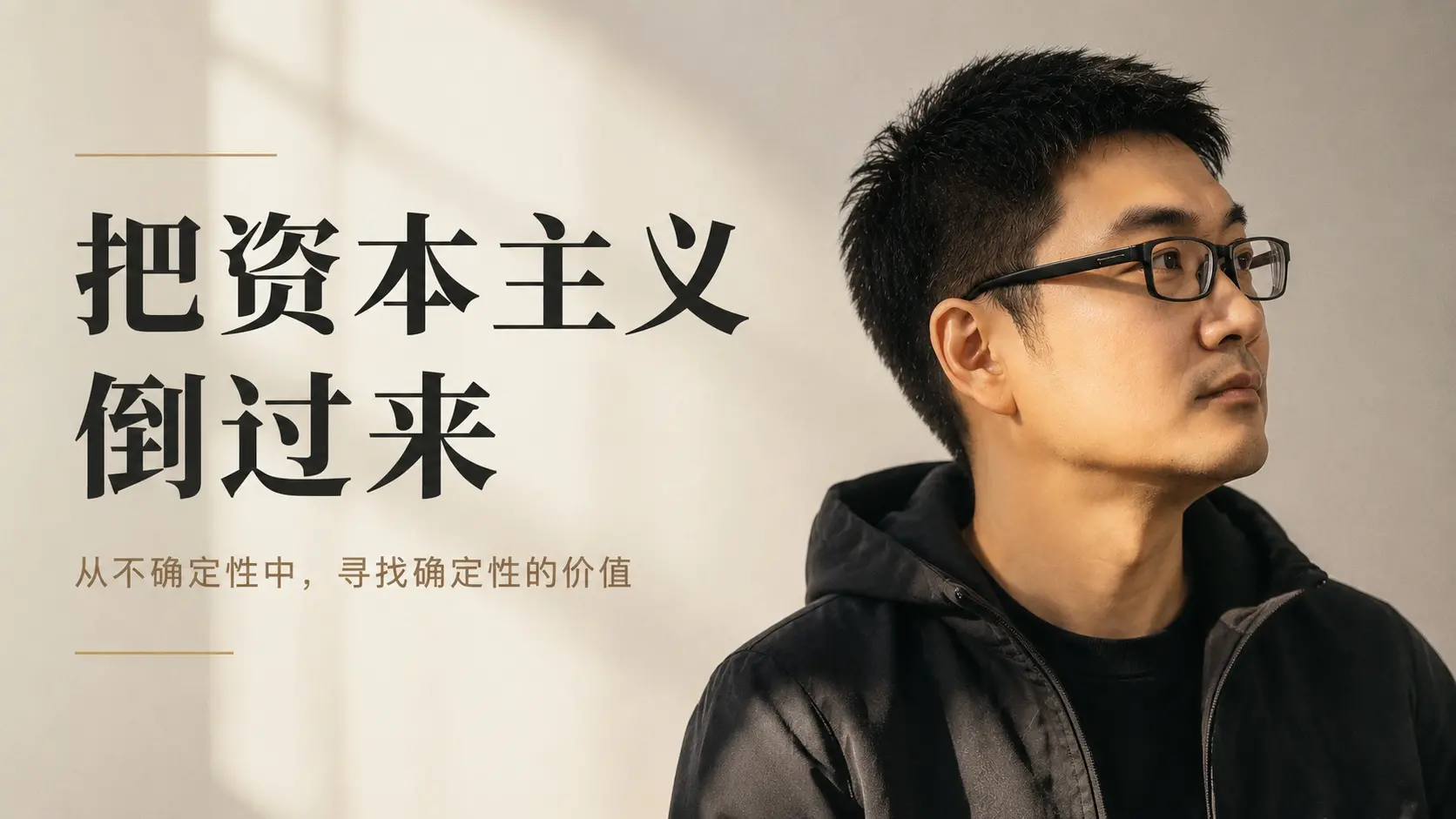
This text explores the unexpected connection between Pinduoduo founder Colin Huang and blockchain, as suggested in his article *Turning Capitalism Upside Down*. Huang argues Pinduoduo's core business is about managing "uncertainty." He posits that wealth flows to the rich because they absorb life's uncertainties (e.g., illness, job loss) that devastate the poor, who pay a premium for certainty through insurance or stable prices. Pinduoduo's model attempts a "reverse insurance": by aggregating consumer demand via group-buying and flash sales, it creates a large, predictable order for manufacturers. This certainty allows factories to remove risk premiums, passing savings back as lower prices, thus partially reversing the wealth flow. The key obstacle, Huang notes, is that an individual's buying intent is an unreliable promise. He then asks if blockchain is the natural solution for this "reverse insurance." The text elaborates that blockchain, through smart contracts with binding deposits, could transform casual intent into a costly-to-break, enforceable commitment. This replaces interpersonal trust with coded rules, making promises credible, pricable, and resistant to fraud. Finally, the author draws a parallel to Bitcoin, framing two paths to creating certainty: the "Pinduoduo path" of aggregating decentralized will into scale, and the "Bitcoin path" of locking rules into immutable code. Both sacrifice something—personal freedom or system flexibility—to manufacture trust and predictability.

链捕手Yesterday 00:08

What's the Connection Between Pinduoduo's Huang Zheng and Blockchain?

链捕手Yesterday 00:08

活动图片